
TMT Bar Grades Explained: Understanding Fe 500, Fe 500D and Fe 550 for Construction
Choosing the right TMT bar grade is an important step in planning a safe and durable construction project. TMT bars are used as reinforcement in reinforced cement concrete (RCC) structures, helping buildings withstand tensile forces and structural loads.However, not all TMT bars have the same mechanical properties. Grades such as Fe 500, Fe 500D and Fe 550 differ in yield strength and ductility, making them suitable for different structural requirements.This guide explains the key differences between common TMT bar grades and what builders, contractors and homeowners should understand before selecting reinforcement steel.
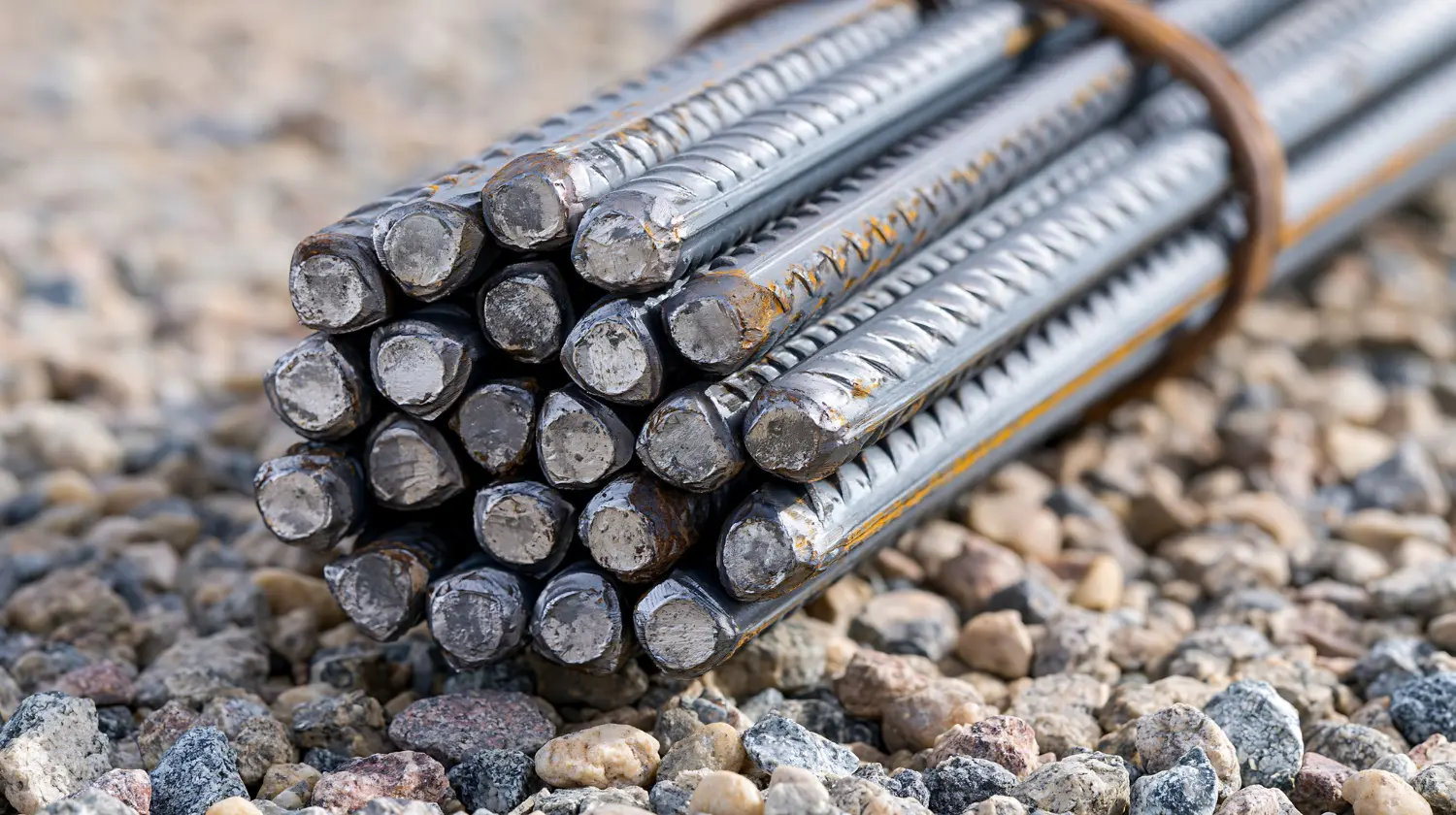
What Does the TMT Bar Grade Mean?
The grade of a TMT bar indicates its specified mechanical properties, particularly its minimum yield strength.
In grade names such as Fe 500 and Fe 550:
- Fe refers to iron.
- 500 or 550 indicates the specified minimum yield strength in megapascals (MPa), subject to the applicable standard.
- The letter D in Fe 500D indicates a higher ductility category than the corresponding standard grade.
The grade is an important part of the reinforcement specification, but it should not be the only factor considered when selecting steel for construction.
Explore Parashakti TMT’s product range to learn more about reinforcement products available for different construction requirements.
Fe 500 TMT Bars: A Common Choice for RCC Construction
Fe 500 TMT bars are widely used in reinforced concrete construction. Their specified minimum yield strength is 500 MPa.
Common applications
Depending on the structural design, Fe 500 reinforcement may be used in:
- Residential buildings
- Commercial buildings
- RCC columns and beams
- Slabs and foundations
- General construction projects
What to consider
Fe 500 bars should be selected according to the structural drawings, applicable standards and project requirements. Builders should verify the grade marking and relevant test documentation before accepting the material.
Fe 500D TMT Bars: Higher Ductility for Structural Requirements
Fe 500D TMT bars have a specified minimum yield strength of 500 MPa, along with higher ductility requirements than standard Fe 500 bars.
Ductility describes the ability of steel to deform before breaking. This property can be important in structures that need to accommodate deformation under demanding loading conditions.
Common applications
When specified by the structural engineer, Fe 500D TMT bars may be used in:
- Residential and commercial buildings
- RCC structures requiring higher ductility
- Projects in areas where seismic design requirements are important
- Structural applications requiring suitable strength and deformation capacity
Why ductility matters
A reinforcement bar’s ability to deform can contribute to the performance of a reinforced concrete structure under stress. However, earthquake-resistant construction depends on the complete structural design, reinforcement detailing, concrete quality and construction practices—not simply the grade of steel.
Explore Parashakti FE 550D TMT Bars for product information and specifications.
Fe 550 TMT Bars: Higher Yield Strength
Fe 550 TMT bars have a specified minimum yield strength of 550 MPa, which is higher than Fe 500 and Fe 500D.
Higher-strength reinforcement may be specified for certain structural designs where the engineer determines that its mechanical properties are appropriate.
Common applications
Depending on the project design, Fe 550 reinforcement may be considered for:
- Selected high-load structural applications
- Large construction projects
- Commercial and industrial structures
- Projects where higher-strength reinforcement is specified
What builders should know
Higher yield strength does not automatically make Fe 550 the best option for every building. The structural engineer must consider the required strength, ductility, reinforcement detailing and applicable design standards.
Fe 500 vs Fe 500D vs Fe 550: Key Differences
PropertyFe 500Fe 500DFe 550Specified minimum yield strength500 MPa500 MPa550 MPaDuctility categoryStandardHigher ductility requirements than Fe 500Depends on applicable grade and standardTypical considerationGeneral RCC constructionApplications requiring higher ductilityApplications requiring higher yield strengthSelection basisStructural designStructural design and ductility requirementsStructural design and strength requirements
The exact mechanical requirements, elongation values and testing criteria should be checked against the applicable Indian Standard and the manufacturer’s product documentation.
How to Choose the Right TMT Bar Grade for Your Project
1. Follow the structural drawings
The reinforcement grade should match the specifications provided by the structural engineer. Do not change the grade without professional approval.
2. Consider the building’s location
Construction conditions can influence material selection. Coastal areas, for example, may require additional corrosion-protection measures depending on exposure conditions.
For projects requiring corrosion-resistant reinforcement, explore Parashakti FE 550D CRS TMT Bars and Epoxy-Coated TMT Bars.
3. Verify product quality and documentation
Check the grade markings, manufacturer identification, dimensions and relevant test certificates. Ensure that the supplied reinforcement meets the project specifications and applicable standards.
4. Choose a reliable manufacturer
Consistency in manufacturing, product documentation and supply reliability can help builders manage construction requirements more effectively.
Learn more about Parashakti TMT and explore its reinforcement product range.
Common Misconceptions About TMT Bar Grades
A higher grade is always better
Not necessarily. The best grade is the one specified for the structure. Higher yield strength does not replace the need for appropriate ductility, detailing and engineering design.
Fe 500D automatically makes a building earthquake-proof
No. Earthquake-resistant performance depends on the overall structural design, detailing, materials and construction quality. TMT bar grade is only one component.
All TMT bars of the same grade are identical
Products can differ in manufacturing quality, dimensions, documentation and compliance. Buyers should verify the specific product and its supporting certificates.
Parashakti TMT Products for Construction Requirements
Parashakti TMT offers reinforcement products for different construction applications. Builders and contractors can explore:
For product specifications or project-related enquiries, visit the Parashakti TMT contact page.
Frequently Asked Questions
What is the difference between Fe 500 and Fe 500D TMT bars?
Both have a specified minimum yield strength of 500 MPa. Fe 500D has higher ductility requirements than standard Fe 500, which can be important for structural applications requiring greater deformation capacity.
Is Fe 550 stronger than Fe 500?
Fe 550 has a higher specified minimum yield strength than Fe 500. However, the suitable grade depends on the structural design and project requirements.
Which TMT bar grade is suitable for house construction?
Fe 500, Fe 500D or Fe 550 may be specified depending on the building design. The structural engineer should determine the appropriate grade.
Can TMT bar grades be mixed in one building?
Different grades may be used only when permitted by the structural design and properly specified. Builders should not mix grades without approval from the structural engineer.
Where can I explore Parashakti TMT products?
Visit the Parashakti TMT products page to explore available reinforcement products.
Conclusion
Fe 500, Fe 500D and Fe 550 TMT bars differ in their specified yield strength and ductility requirements. Understanding these differences helps builders and contractors make informed decisions, but the final grade selection must always follow the structural design and applicable standards.
For construction projects in Gujarat, explore Parashakti TMT and its TMT reinforcement products to learn more about available solutions for your project.

Benefits For Creatives
As a member of Debut House, you’ll get access to a large variety of resources and networking opportunities.
Suspendisse varius enim in eros elemen tum tristique. Duis cursus, mi quis vive rra ornare, eros dolor interdum nulla.
Debut House members have access to engage with their industry's top pros and sharpen their creative skills.
Debut House members have access to engage with their industry's top pros and sharpen their creative skills.
Debut House members have access to engage with their industry's top pros and sharpen their creative skills.